Overview:
The year is 1853, and the Habsburgs are Europe’s most powerful ruling family. With his empire stretching from Austria to Russia, from Germany to Italy, Emperor Franz Joseph is young, rich, and ready to marry.
Fifteen-year-old Elisabeth, “Sisi,” Duchess of Bavaria, travels to the Habsburg Court with her older sister, who is betrothed to the young emperor. But shortly after her arrival at court, Sisi finds herself in an unexpected dilemma: she has inadvertently fallen for and won [read more…]
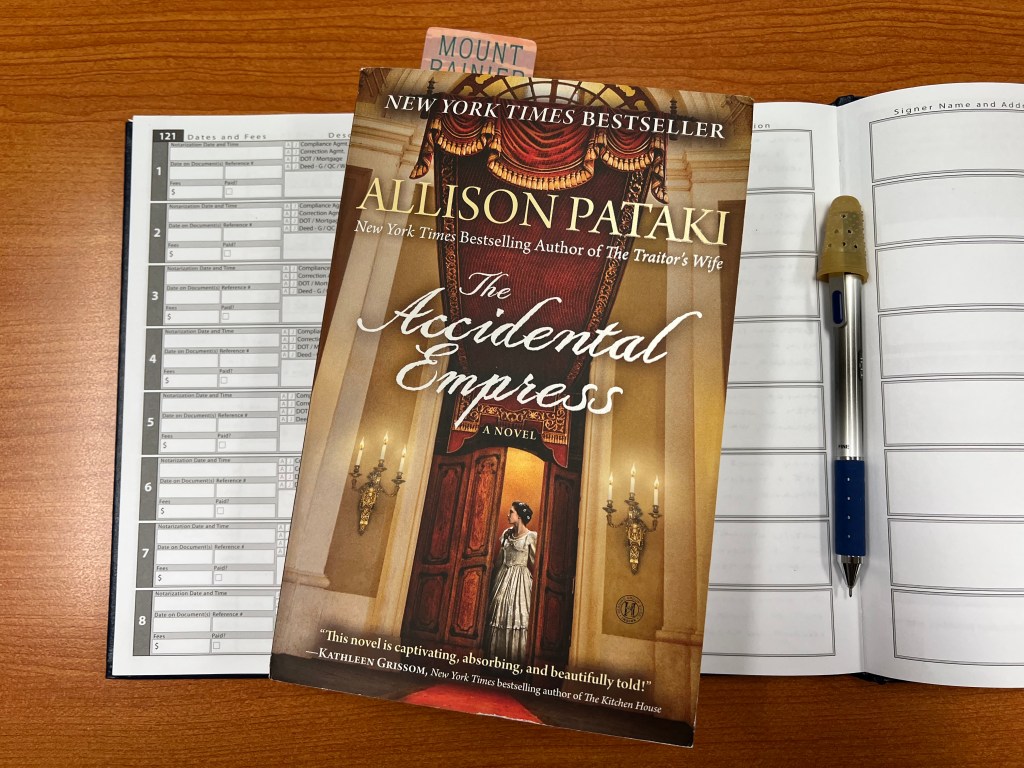
Would I Recommend It?
To those who enjoy history with a medium dose of fiction, yes.
Thoughts?
Such a suspenseful book!
Thanks to my wonderful lack of knowledge about the Austro-Hungarian Empire I got to read this book like the ending hasn’t already happened. My Hungarian friends, my husband, and my mother all tried to kill the suspense by giving me tidbits of history. And each time I squashed and silenced them–no worries, they lived to complain of my authoritative tyranny.
It’s quite impressive how little I knew of Sisi considering I’ve even visited two of the castles she resided in: Buda Castle and Gödöllő Palace. But when touring castles I’m more into them from an architectural standpoint versus the people who lived there. From my two visits to Gödöllő Palace all I learned and remembered is that some lady who likes riding horses and was named Elizabeth lived within its walls.
Thanks to Pataki’s book I now know sooooo much more about the young woman who became such a beloved icon in Hungary even though she was not of Hungarian descent. The book reads quite like a romantic, but fairly tragic, love story. Sisi was tormented by an overbearing mother-in-law. A husband who was taught to rule and not how to give love. Sprinkle in lots of typical and crazy monarch style inuendoes and you have yourself quite the royal drama. (Worthy of a Netflix original series.)
Sisi’s extreme care for her hair is at times quite incongruent with how she didn’t want to end up or be like Marie Antoinette. She spent lavishly on creams, oils, and shampoos. Spent hours braiding her hair and refused to cut her insanely long hair–she literally wore it like a permanent crown atop her head. Ordering up the finest of dresses and corsets from Paris. (She would have made a fantastic Rodan + Fields rep if she lived present day cause she was all about keeping wrinkles away by practically bathing herself in lotion.)
The poor empress definitely seemed to suffer from depression, anxiety, and an eating disorder. Who wouldn’t? She was deprived of her own children, her love of the outdoors and riding horses, and even her talent for writing poetry.
Pataki is a pretty good writer, but perhaps more a historian than a novelist. She definitely didn’t venture too far into “bedchamber details.” Sigh. I do enjoy me some R rated monarch bed scenes (cue the series: Tudors). She used the phrase “cocked her/his head” soooooo many times I lost count and it became so excessive in use that I’d cringe as I approached the end of the book fearing how many more times she would use that phrase. Like, enough already! I think my neck hurts from all the cocking it sideways. Perhaps that’s why she started having more than just Sisi cocking her head halfway through…
I was also surprised by the multiple incorrect Hungarian translations. “Van két kislány” means “there are two little girls.” It doesn’t mean “I have two little girls.” That would be “van két kislányom.” Pataki speaks Hungarian. This is not a complicated sentence to translate. Why? What? Confused as to why she couldn’t be more accurate. She was also inconsistent in spelling the names of characters. Deák Ferenc was correct, but Gyula Andrássy became Julius Andrássy.
Tons of quotes by German author, Goethe. How are people not using his quotes in Facebook inspirational quotes?!? (I quite dislike inspirational quotes. I love poking holes in them.) But Goethe, people, this guy has grit. Such as his quote “Dream no small dreams, for they have no power to move the hearts of men.”
As a reader it’s important to read the Q&A section at the end of the book where Pataki sheds light on what was fiction and what were facts in her book. She switched timelines here and there to fit her story. She added a character. She took out characters. She made Sisi’s brother evil. I’m not entirely sure that this last part was really at all necessary. All in all, please read that section before going out into the world and telling people about Sisi’s life.
I do plan to read the 2nd book in this series: Sisi: Empress on Her Own.
Quotable Quotes:
“Every day one should at least hear one little song, read one good poem, see one fine painting and speak a few sensible words.” – Goethe, page 396
“We do not have to visit a madhouse to find disordered minds. The world is the madhouse of the universe.” – Goethe, page 385
“I love those who yearn for the impossible.” – Goethe, page 380
“Once I blazed across the sky, leaving trails of flame. I fell to earth, and here I lie. Who’ll help me up again?” – Goethe, page 316
“I loved, I lived, I wandered throughout the world; But never reached what I strove for–I deceived and was deceived. – Empress Elisabeth “Sisi” of Austria – page 312
“Dream no small dreams, for they have no power to move the hearts of men.” – Goethe
Book:
The Accidental Empress
Author:
Allison Pataki
Genre:
Fiction | Historical Fiction | Drama
My Rating:
4 Stars

 thehikingbookworms.com